Lesson 7: Playing Scales
The most important skill to learn if you want to play melodies easily.

I've heard a few students say, "I'm playing the autoharp for the FUN of it! I'm NOT going to practice scales. Period." OK. That's fine. Skip this lesson, then come back to it when you've decided you want to play melodies well. This is how it's done. We'll start by examining the C scale. You'll find that the notes of the scale are contained in three chords: C, G, and F. Here's the C-Scale with Melody chords under each note:

Now, while pushing down the C button with your left hand, try to pluck "do" with the middle finger of your right hand (you'll want to get an idea of what this note sounds like in your head by strumming a C chord.) Next, push down the G bar, and pluck "re". Now back to "do" while pushing the C bar.
Now, do a little exercise, with four plucks on each note :
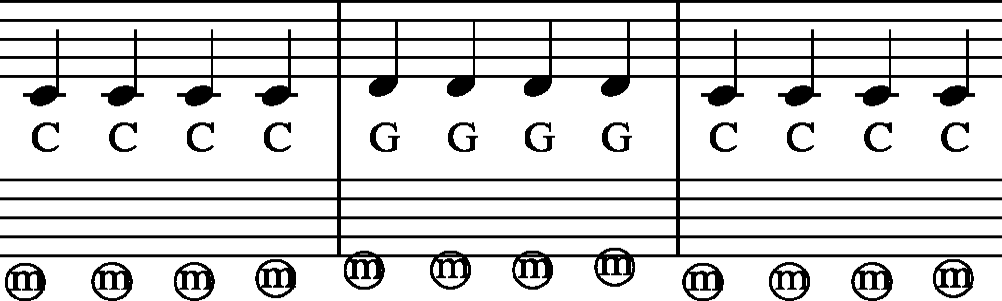
Next, start with "do" with the C bar, go to "re" with the G bar, and pushing down the C bar again, pluck "mi". Now play “do-re-mi"
Next, pluck "do-re-mi-re do".
Now, do four plucks on each note, repeating 3 times

Next, do the same thing, but go up to fa and back as shown:

Now, sol:
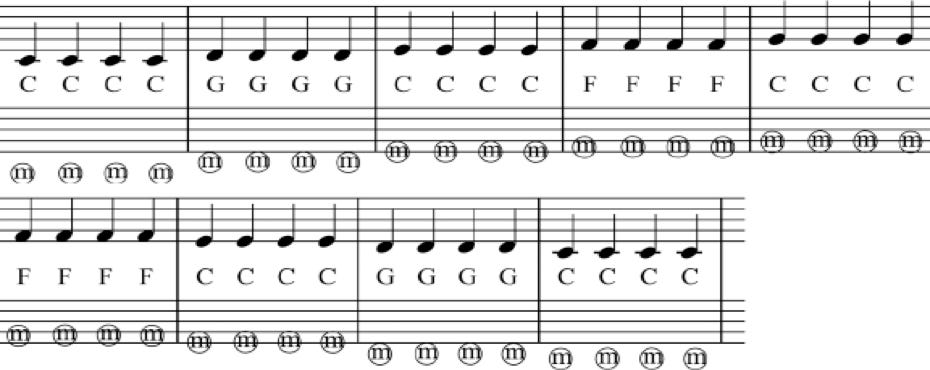
We could go up to la and back, up to ti and back, then do the whole scale. But I think you can see where we're going here. Let's just go ahead and do the the whole scale with four plucks per note, up and down:
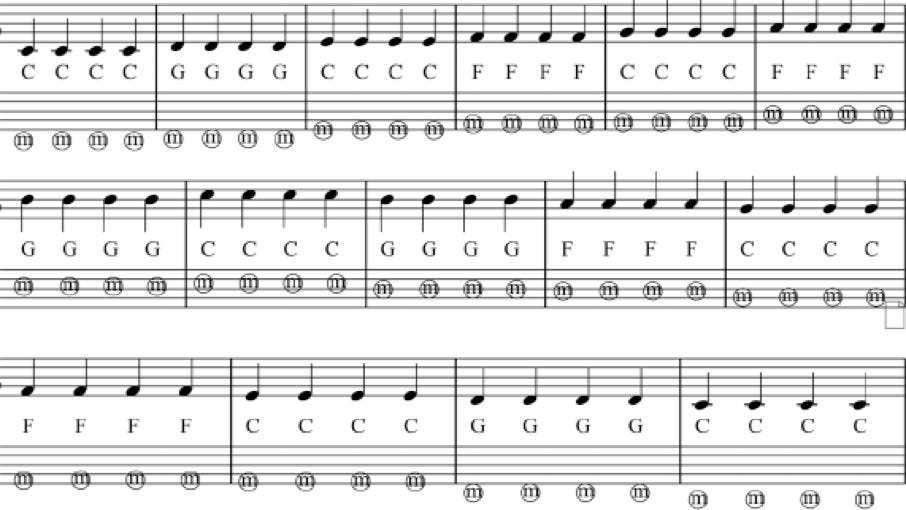
Now, try it with two plucks per note, up and down, repeating the top note:
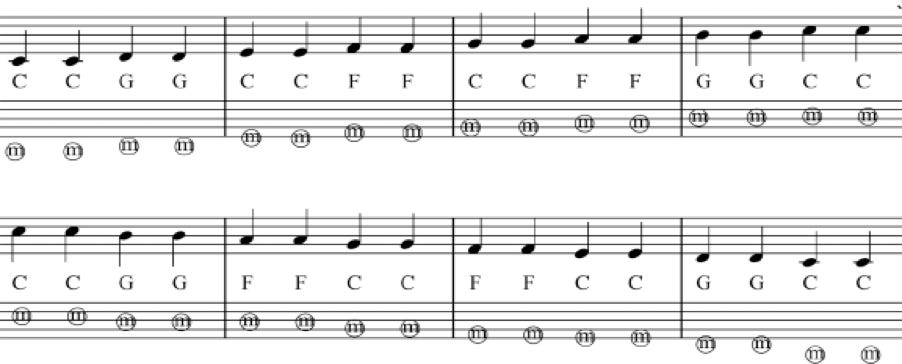
And now, one pluck per note. Try to get the exact note of the scale, but don't look down at the strings. Play it three times!
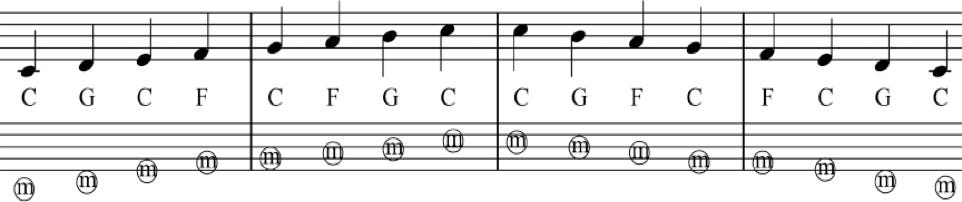
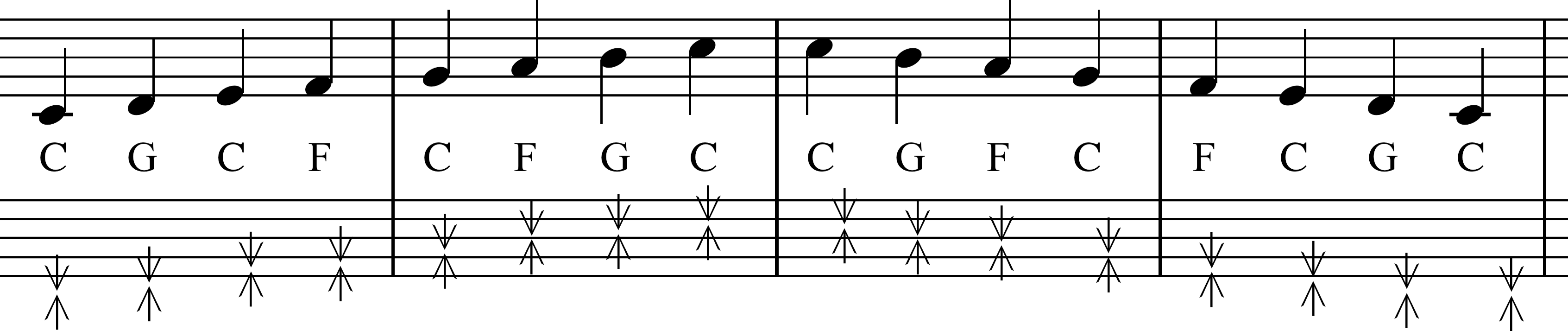
Once you've mastered the scale with one finger, then try playing it with a little pinch, bringing your middle finger down on the melody note and your thumb up on one or two lower harmony notes, only hitting 3 or four strings.
Practice until you can play the whole scale cleanly up and down with a pinch, like this:
I think scales are outrageously fun; don't YOU? Well, so maybe you don't, but practicing them will make you an immeasurably better melody player. I promise. Let me tell you, writing and recording all those little examples and exercises was NOT fun, but I did it just for you; so you owe me some scale practice!
NOW, PLAY THE SCALE WITHOUT LOOKING AT THE BOOK! Once you can
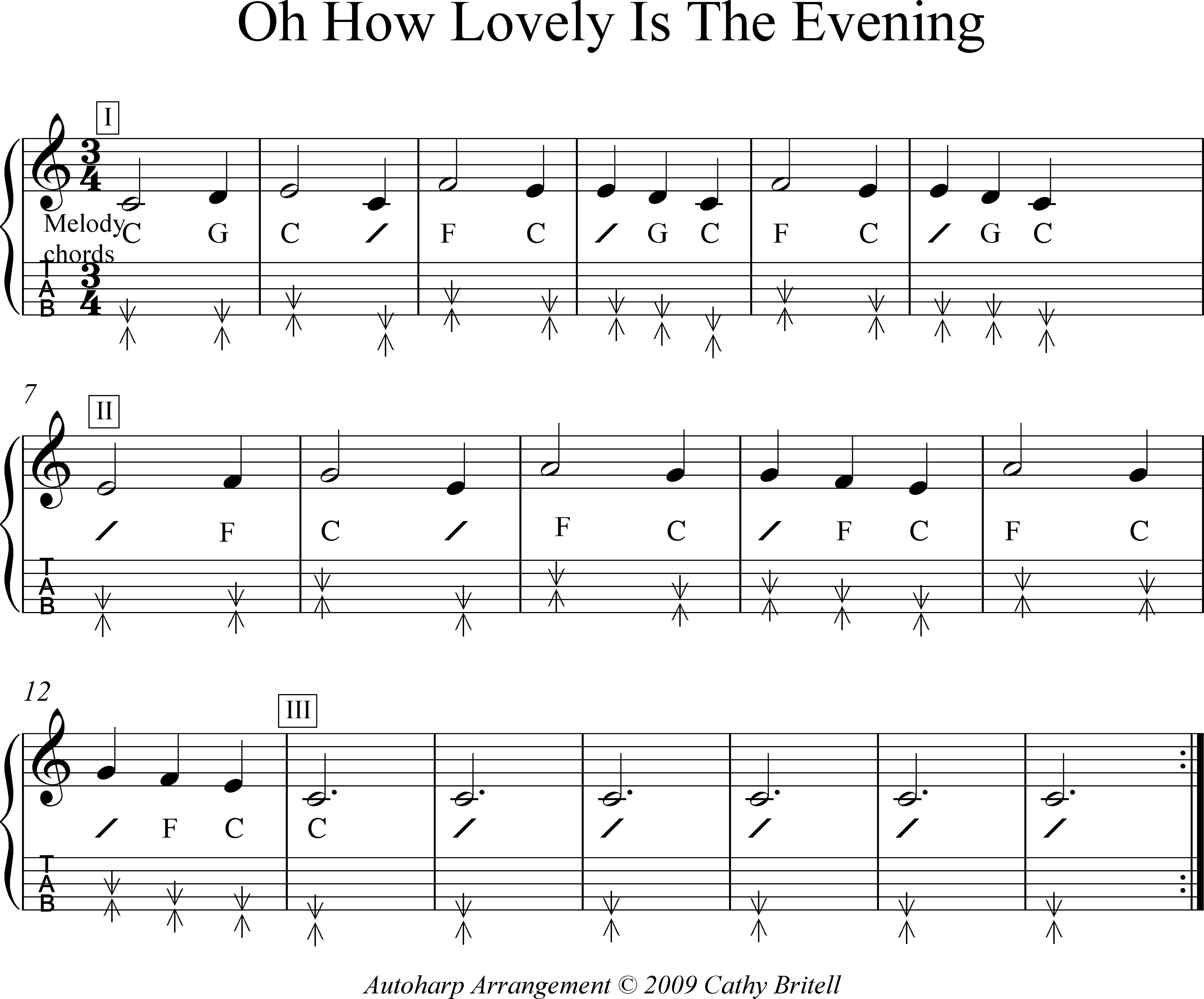
play the scale BY HEART, it's time to start on this lovely round. (You didn't think I'd make you do all those exercises without a tune, did you?) Note that the first four notes in this tune are "do-re-mi-do". The chords UNDER the notes are designated as the "melody chords". And when a melody chord is repeated, you'll see a slash (/) which tells you to play the same chord you just played. Play the whole tune, see if you can play it as a round with another instrumentalist, or play your part while somebody else sings the other part. Or, you could even play it as a round with me . (Wish I could hear you!) Each of the roman numerals in a box denotes one part. So you start at I when the other person gets to II. Have fun! Once you become familiar with this tune, also try to play it without looking at the music.